
Picking a Home EV Charger
If you need a home EV charger, there are a lot of options out there. We can help you narrow down those options and help you pick a highly rated charger that will be the right choice for YOU!
If you are new to EV charging, read all of the info to help you make the choices. Once you are ready, click Pick an EV Charger to use the selection wizard!
Is it Safety Certified?
This is arguably the most important check. Look for a UL or ETL certification mark on the product. These marks mean the charger has been independently tested by a Nationally Recognized Testing Laboratory (NRTL) to meet strict U.S. safety standards. Uncertified chargers can be a significant fire risk. All of the charger recommended here are safety ceritifed.
Will it be Installed Indoors or Outdoors? If your charger will be exposed to rain, snow, or dust, you must get one with a proper weatherproof rating. Look for a NEMA 4 or NEMA 3R rating. A NEMA 4-rated charger is more robust, offering protection from heavy, hose-directed rain, while a NEMA 3R is sufficient for general outdoor use. The chargers listed in our recommendations can be used indoors or outdoors.
Plug-In or Hardwired?
Plug-In Installation
Connects to a high-power outlet (NEMA 14-50), similar to an electric stove
Pros:
- Easier Installation: An electrician just needs to install the outlet, which is often cheaper than hardwiring.
- Portable: You can unplug the charger and take it with you if you move.
- Simple Replacement: If the unit fails, you can easily swap it for a new one without an electrician.
Cons:
- Lower Max Power: Most plug-in units are limited to 40 amps to comply with electrical code, which requires circuits to be loaded to only 80% of their maximum rating (a 50-amp circuit supports a 40-amp continuous load).
- Potential for Wear: The plug and outlet can wear out over time with repeated use, though this is rare in a home setting

Hardwired Installation
The charger is wired directly into your home's electrical panel by an electrician.
Pros:
- Higher Power Available: This is the only way to safely achieve charging speeds of 48 amps or higher.
- Cleaner Look: No visible plugs or outlets on the wall.
- Extremely Reliable: A permanent, robust connection that's often considered safer and more "set-it-and-forget-it." It's also better for outdoor installations.
Cons:
- Higher Installation Cost: Installation is more involved and typically more expensive.
- Not Portable: The unit is fixed to your home. Moving it requires an electrician.

Smart or "Dumb" Chargers
Another major decision is whether you wanted a WiFi connected chargers with smart features or a non-connected charger with no smart features.
"Dumb" Chargers (Non-Connected):
These chargers simply charge your car when you plug it in. There's no Wi-Fi, app, or special features.
Pros:
- Lower Cost: Generally the most affordable option.
- Simple & Reliable: Fewer components mean fewer potential points of failure.
Cons:
- No Remote Control: You can't start, stop, or monitor charging from your phone.
- No Data: You can't track your energy usage.
- Ineligible for Rebates: Many utility rebates and special "off-peak" charging rates require a "smart" charger that can communicate with the utility.
"Smart" Chargers (Wi-Fi Connected):
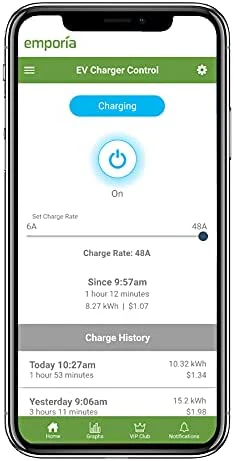
These connect to your home Wi-Fi and have a companion app.
Pros:
- Scheduled Charging: Set the charger to only operate during off-peak hours to save money on electricity.
- Energy Monitoring: Track exactly how much energy your car is using and what it costs.
- Utility Rebates: Many are certified for demand-response programs that can earn you credits or rebates from your power company.
- Remote Control & Notifications: Start or stop charging from anywhere and get alerts when your car is full.
Cons:
- Higher Cost: They are more expensive upfront.
- Requires Wi-Fi: You need a stable Wi-Fi signal in your garage or wherever the charger is installed.
Plug Type
This is a major consideration right now.
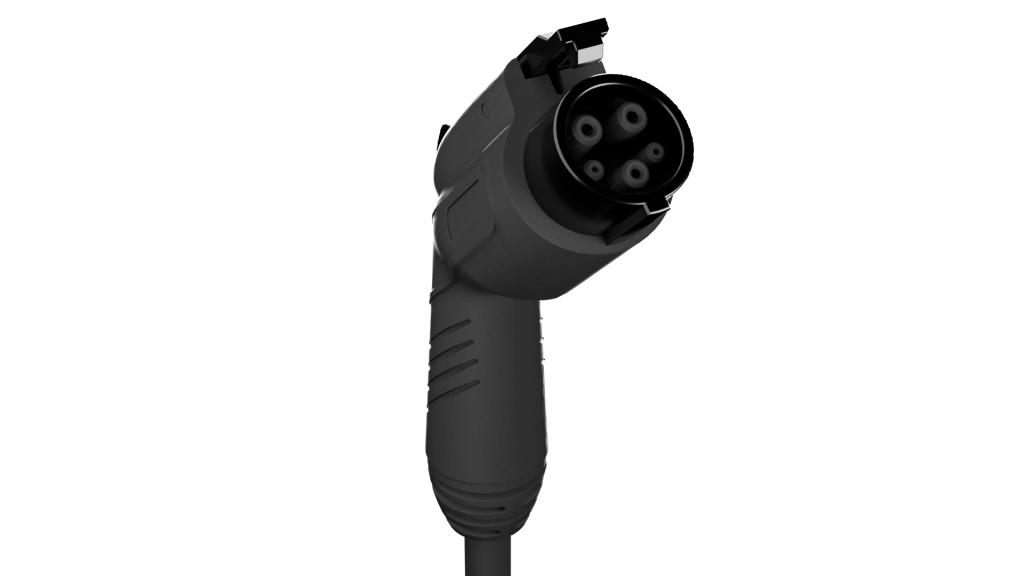
- J1772: This was the standard plug for all non-Tesla EVs and most still use this plug type.
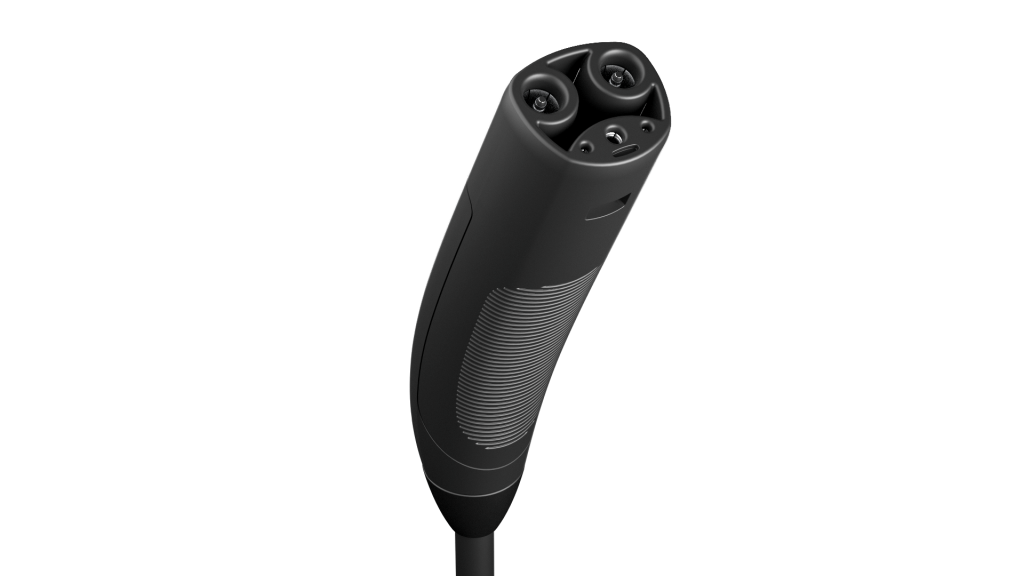
- NACS: This is plug all Tesla's have. All other manufacturers have plans to switch to this but currently only a few have begun to do so (Hyundai, Kia, Lucid, etc.)
This means if you have a J1772 car today, a J1772 charger is simplest (you can use an adapter for a future NACS car). If you have a Tesla, a NACS charger is easiest. If you want to "future-proof" as much as possible, a unit with both plugs (like the Tesla Universal Wall Connector mentioned in the guide) is a great option.
"What if I want to have both connector types - J1772 and NACS?"
- Option 1 - Tesla Universal Home Charger: This new unit has both connectors and gives you the flexibility of using either J1772 or NACS. (Buy on Amazon)
- Option 2 - Adapters: You can use an adapter to charge a NACS car with your J1772 charger or vice versa. This actually can be even more flexible than buying the Tesla Universal Home Charger. If you use an adapter, it is something you can take with you while on road trips to use on chargers at hotels and other places. Here are the two adapters we recommend:
J1772 Connector
NACS Connector
"Is my circuit breaker panel capable?" (The Load Calculation)
- Why it matters: This is the most important question for an electrician. A Level 2 charger is a heavy, continuous load, like running your central A/C for hours.
- How to check: An electrician performs a "load calculation." They add up all your home's major appliances (A/C, stove, dryer, etc.) to see if your panel has enough spare capacity.
- Panel Size: Homes with 200-amp service usually have plenty of room. Homes with older 100-amp panels are often at or near capacity, making this a major challenge.
- What if my panel is full? You are NOT out of luck!
- Option A (Expensive): A full panel upgrade (e.g., from 100A to 200A), which can cost thousands.
- Option B1 (Smart & Affordable): Use a charger with "Intelligent Load Management." Smart chargers like the Emporia Pro EV Charger is be paired with an Emporia Vue 3 monitor that clamps onto your home's main power lines. It reads your total house power usage in real-time. If they see the house is about to exceed the panel's limit (e.g., you turn on the oven and the A/C), the charger automatically slows down or pauses the car charging to keep the whole home safe. When the appliance turns off, it ramps the car charging back up. This is a game-changer and avoids a panel upgrade.
- Option B1 (Smart & Affordable): Another smart and more affordable option is to share power with your home dryer outlet. A device from a company called NeoCharge allows for this. The main downside is that your charging will be a max of 24 amps. That is still fine for most EV owners and will save you a lot of money.
- Option C (Simple but with limits): You can also just charger at lower power by using a charger that can limit its power output on a circuit with a lower rated circuit breaker. For example, you can set the Emporia EV Charger to only charge at a max of 32 amps (instead of 40 amps). The circuit breaker would need a 40 amp breaker and the outlet should be properly labeledas a 40 amp circuit. Consult an electrician about this option and to ensure it meets local building code.
"How many amps do I need?"
The best strategy is to buy a flexible, high-amperage charger and install the largest circuit your home can safely support.
- If you can install a 60 amp circuit: Go with a 48 amp charger. This maximizes your speed and future-proofs your home for EVs with faster charging capabilities. This will give you 28+ miles of range per hour or 280+ miles overnight. This must be hardwired.
- If your limit is a 50 amp circuit or you want a plug in charger: Go with a 40 amp charger. This is a very fast and cost-effective sweet spot, often using the convenient NEMA 14-50 plug. This will give you about 24 miles of range per hour or 240 overnight.
- If your limit is a 40 amp circuit: A 32 amp charger is still a fantastic choice that will fully charge your battery every night for typical driving. This will give about 19 miles of range or 190 overnight. Many portable chargers are 32 amp.
Note: Many 48 and 40 amp chargers can be "derated" physically or with software to cap the maximum amps to a lower amount.
"I need to charge more than one EV." (The Multi-Car Plan)
Why it matters: If you think you'll have two EVs in the future, planning for it now saves thousands.
The Expensive Way: Having an electrician run two separate, high-power circuits. This is expensive and may not even be possible with your panel.
The Smart Way: "Load Sharing" (or "Power Sharing") Use a device like the NeoCharge Smart Splitter. This devices allows you to plug in two EV chargers into one outlet and it can manage the load between the two chargers. We have not reviewed the NeoCharge Smart Splitter but you can find out more info here.