
Autel brings automotive-grade diagnostics, offline Bluetooth control, and consumer-accessible OCPP to a 50-amp home charger.
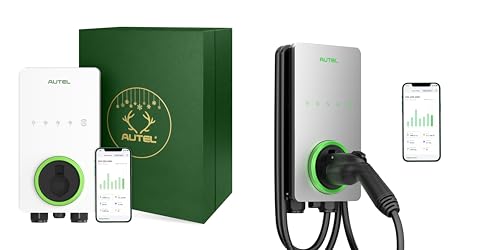
The Short Version
The Autel MaxiCharger Lite delivers 50A power paired with one of the most capable diagnostic apps available. While solar balancing requires a proprietary meter and Home Assistant setup takes some network tinkering, its offline Bluetooth reliability and RFID security make it a top-tier choice.
Buy It If
The MaxiCharger Lite is ideal for EV owners who prioritize deep diagnostic metrics, reliable offline Bluetooth control, and open OCPP home automation over closed-cloud platforms.
Skip It If
You want solar balancing without buying more hardware, or a one-click Home Assistant integration.
- Max Output
- 50A Hardwired12 kW) / 40A Plug-in (9.6 kW
- Cable Length
- 25 FeetCold-Flexible
- Weather Rating
- NEMA 4XNEMA 4 on spec sheet
- Connectivity
- WiFi & Direct Bluetooth
- Access Control
- RFID Card Tap & App Management
- Warranty
- 3 Years
What I Liked
- Direct Bluetooth connection keeps all app controls functional during Wi-Fi or internet outages
- Native OCPP toggle accessible directly in consumer app settings for Home Assistant integration
- Detailed electrical diagnostics and live power graphing outshine typical basic EVSE apps
- Physical RFID cards included in the box for local tap-to-charge security
- Granular time-of-use tariff builder tracks charging expenses against gas savings
What To Watch
- Dynamic load balancing requires purchasing Autel's proprietary energy meter
- No official direct cloud API for Home Assistant
- Documentation shows conflicting weather ratings between NEMA 4 and NEMA 4X
- OCPP integration can encounter TLS certificate quirks behind reverse proxies
Why I wanted to test this one
I picked up the Autel MaxiCharger Lite because I was curious whether an automotive diagnostics giant could translate its scanner expertise into a residential wallbox. Most smart chargers treat software like a rushed afterthought, slapping basic on-off switches inside a clunky interface. Autel built its reputation on professional shop diagnostics, and I wanted to see if that engineering rigor showed up in their home charging software.
The hardware spec sheet immediately grabbed my attention with 50-amp hardwired capacity and physical RFID cards included in the box. Many EVSE makers charge an absurd premium for access control cards, so seeing them bundled as standard hardware was a refreshing change. But paper specs mean very little if the software falls flat, and I went into this review ready to criticize any corner-cutting.
Getting it installed and on Wi-Fi
Installing the unit relies on a modular mounting bracket, supporting either a full 50-amp hardwired run for 12 kW delivery or a 40-amp NEMA 14-50 plug. The 25-foot cable is built with cold-flexible rubber, which makes a huge difference if you park outside in sub-freezing temperatures. Autel also accommodates different garage layouts by offering both integrated and separate holster setups.
I did find an irritating contradiction in Autel's materials. The basic spec sheet lists a standard NEMA 4 enclosure, but Autel's official product documentation specifies a NEMA 4X rating. That extra corrosion resistance matters for outdoor durability, and while the higher rating is great, sloppy documentation drives me crazy. The hardware is backed by a three-year warranty from an established automotive electronics company, which gives me far more confidence than buying from a fly-by-night brand.
Enclosure Rating Discrepancy
Autel lists NEMA 4 on spec sheets but specifies NEMA 4X in official documentation. Both offer solid outdoor protection, but NEMA 4X adds dedicated corrosion resistance.
Autel put an open OCPP toggle right inside the consumer app settings, bypassing the walled gardens that plague smart EV chargers.
Living with the app
The Autel Charge app is where this charger sets itself apart from typical home charging boxes. Instead of just showing a generic green charging light, you get live power graphs alongside advanced electrical diagnostics right on your phone. It even features a vehicle battery state-of-health estimator. Getting this level of diagnostic depth makes standard EVSE apps feel like abandoned beta tests, and I love having real metrics at my fingertips.
Managing driver access is handled cleanly through physical RFID card authentication and per-user charging profiles. Handing an authorized card to a family member or neighbor is infinitely simpler than forcing them to download an app and create an account. When you need records for tax write-offs or workplace reimbursement, the app generates detailed PDF and CSV session exports without unnecessary friction.
Scheduling and what it actually saves
Smart off-peak scheduling and an auto-start delay feature let you pin charging sessions directly to cheap electric rates. I despise chargers that force you through confusing timer setups, but Autel keeps the scheduling interface intuitive. You dial in your preferred charging windows, and the unit holds power until your designated off-peak rate begins.
The cost-tracking tool is genuinely helpful because of its granular utility tariff builder. Rather than forcing you into a flat per-kilowatt-hour estimate, it lets you map complex time-of-use rate structures. The app tracks your exact charging expenses and graphs them against estimated gasoline savings, giving you clear numbers on what staying away from gas stations actually saves you.
Solar and energy management
The MaxiCharger Lite is solar sync ready, built to coordinate EV charging with residential solar production. It also supports dynamic load balancing, which allows you to install a high-power 50-amp charger on an older or constrained electrical service panel without risking an overload. That feature alone can save you thousands of dollars by dodging a mandatory main service panel upgrade.
There is a significant restriction here that annoyed me. Dynamic load balancing only functions if you purchase Autel's proprietary energy meter. If you already installed third-party current transformers or an existing whole-home energy monitor, Autel cannot use those data feeds. I think locking load management behind proprietary companion hardware is frustrating, even if the feature itself works well.
What happens when the internet drops
Too many smart home devices turn into dead plastic the second your internet connection drops. Autel avoided that design flaw by equipping the MaxiCharger Lite with a dual Bluetooth and Wi-Fi architecture. If your home router restarts or your garage sits in a Wi-Fi dead zone, your phone connects straight to the charger over Bluetooth, giving you local app control and live status updates without an active internet uplink.
The physical RFID cards also authenticate locally and work entirely offline. While initial setup uses a standard cloud registration process, having a direct local Bluetooth connection gives privacy-minded owners a reliable way to manage their charger without sending constant telemetry to remote servers. I cannot stand appliances that require constant cloud check-ins just to start charging, so this local offline fallback is a massive relief.
Home Assistant and local control
If you expect a native, one-click Autel cloud integration in Home Assistant, you will be disappointed. Autel provides no official cloud API for smart home ecosystems. But they did something far better for enthusiasts: they built an open OCPP Server toggle directly into the consumer Autel Charge app settings. You do not have to jump through commercial dealer portals or beg support for installer access just to unlock it.
You can point that OCPP toggle straight at Home Assistant's community OCPP integration to bring your charger under local control. Community feedback documents a few headaches, especially around TLS certificate verification behind reverse proxies and occasional amperage-setting errors on specific firmware versions. The setup requires patience and network tweaking, but having open OCPP in a consumer wallbox is something I wish every competitor offered.
Open OCPP Access
Autel includes an OCPP Server toggle right inside the standard consumer app settings, enabling local Home Assistant integration without commercial dealer lockouts.
Who I'd tell to buy it
I recommend the MaxiCharger Lite to EV drivers who want deep diagnostic visibility and the security of Bluetooth offline control. It is designed for owners who appreciate real electrical data and prefer backing from an established automotive electronics manufacturer. The included RFID cards also make it a practical choice for shared driveways or outdoor parking spaces where you need quick physical authorization.
Skip this unit if you expect out-of-the-box solar balancing without buying extra hardware, or if you want a zero-effort Home Assistant cloud integration. Autel requires you to buy their dedicated energy meter for dynamic load balancing, and local automation requires configuring OCPP manually. But if you value rich software diagnostics and offline reliability over cloud dependence, this wallbox delivers where it counts.
How It Scored
14 criteria, weighted toward software. What this scorecard does not test: thermal performance, cold-weather behavior, durability, or sustained-load endurance. We focus strictly on software, smart charging, and open control capabilities.
Hardware & Install
91 /100Software & Daily Use
90 /100Independence & Control
80 /100Every home ev chargers runs the same 14 criteria. Compare all scored products .
We may earn an affiliate commission when you purchase through links on this site. This never affects our ratings or editorial independence.