News Summary: First Look at Ford’s $30,000 EV Truck
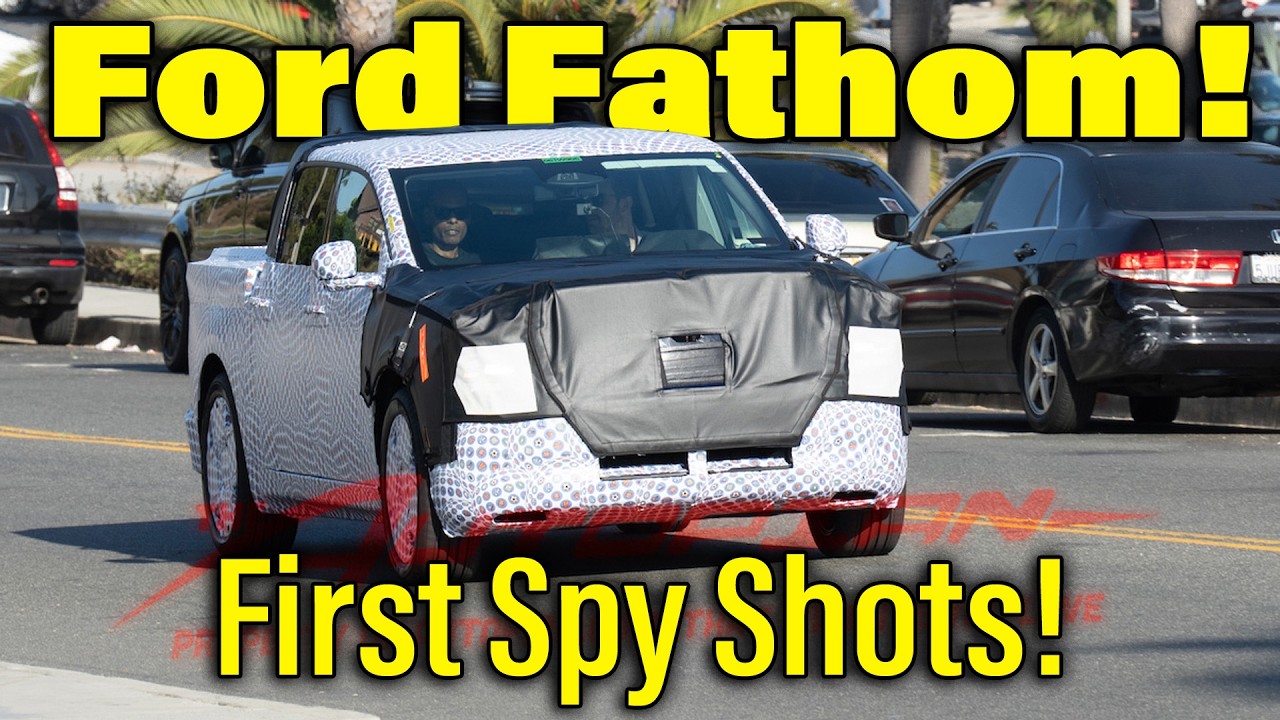
The team at The Autopian recently broke a massive story, publishing spy shots and video of Ford’s upcoming affordable electric truck testing out on public roads. This compact EV pickup—expected to launch around 2027 with a target starting price of $30,000—is built on Ford's new flexible Universal EV platform developed by their skunkworks team in California.
Based on the initial photos and video, here are the core facts and key observations logged from the prototype:
- Sizing: Very similar in footprint to a Ford Maverick or an older Mazda B-Series/Ford Ranger, offering a low, wide, and slightly chunky stance.
- Interior Space: Designed to offer passenger room comparable to a midsize crossover like the RAV4 or current Maverick.
- Aerodynamics: Heavily sloped front hood section under the camouflage, narrow tapered truck bed walls toward the tailgate, and heavy tarping over the rear cab to smooth out airflow.
- Battery Tech: Expected to utilize Lithium Iron Phosphate (LFP) chemistry packaged flat under the floor to keep costs down and optimize interior room.
- Camouflage Easter Eggs: The wrap features subtle graphics including lifestyle icons (a soccer ball, bicycle, dog, potted plant), a scannable QR code, and Ford’s retro-revived "The Universal Vehicle" emblem.
| Spec / Feature | Observed Prototype Detail |
|---|---|
| Estimated Price | Starting around $30,000 |
| Platform | Ford Universal EV (UEV) Skunkworks Platform |
| Target Size | Compact (Maverick class) |
| Battery Chemistry | Lithium Iron Phosphate (LFP) |
| Expected Arrival | 2026–2027 |
Industry Context: Why a $30k Compact EV Truck Matters
For years, the EV market in North America has been dominated by large, expensive trucks and premium SUVs. While full-size electric pickups have their place, the massive demand for the gas and hybrid Ford Maverick—which sold over 155,000 units last year alone—proves that buyers want practical, affordable, urban-friendly trucks.
Developing a compact electric truck at the $30,000 mark using LFP battery chemistry allows Ford to address two major hurdles in current EV adoption: high purchase prices and efficiency penalties caused by heavy, blocky vehicle designs. LFP batteries are cheaper to manufacture, highly durable for daily charging, and do not rely heavily on scarce materials like nickel or cobalt.
Furthermore, Ford's strategy behind the Universal EV platform isn't just about building one single pickup. By creating a flexible architecture that can accommodate multiple body styles on the exact same assembly line, Ford is setting up a low-cost blueprint to compete directly with low-cost domestic options and incoming international EV manufacturers.
The Electric Duo Take: Our Hands-On Perspective
We've been tracking this project closely for a while now. We were there in Louisville last August for what Ford called their "Model T moment," and back in April, we were among a small group invited to tour Ford's EV Development Center in Long Beach, California. While we couldn't bring cameras inside the facility, we actually saw a camouflage prototype drive past us for a few brief seconds. Seeing these detailed spy shots from The Autopian brings that entire experience right back into focus.
Looking closely at these photos, a few technical details immediately stand out to us:
1. Aero-First Truck Design
Ford engineers mentioned to us previously that while this vehicle will look like a truck to human eyes, it won't look like a truck to the wind. You can clearly see that philosophy in action here. The front hood slopes down aggressively under that heavy front tarp, and the bed walls taper inward near the tailgate to control air detachment. Even the rear of the cab is completely covered, hinting at specialized aerodynamic channeling designed to route air neatly over the bed instead of creating a drag pocket behind the back glass.
2. Low Stance and Packaging
The side profile looks thick through the midsection, which makes complete sense given that the LFP battery array sits entirely in the floor. It gives the prototype a low, planted vibe reminiscent of the Maverick Lobo street truck. Up front, you can see small edgeless side mirrors—similar to prototypes we saw in Long Beach—which maximize mirror surface while minimizing aerodynamic drag.
3. Hidden Symbology in the Camo
We love when car manufacturers drop subtle hints in their camo wraps. Zooming in on the wrap reveals little graphics of dogs, bikes, and soccer gear, clearly showing that Ford is targeting active lifestyle buyers who want an easy-to-park daily driver that can haul gear on the weekend. The inclusion of the historic "The Universal Vehicle" badge confirms that this vehicle is indeed the flagship product for their new flexible platform.
Whether Ford decides to call this the Maverick EV, revive the Ranchero name, or introduce an entirely new badge, this is precisely the type of electric vehicle the market needs right now. It hits the sweet spot of affordability, utility, and size that everyday drivers have been asking for since the EV transition began.