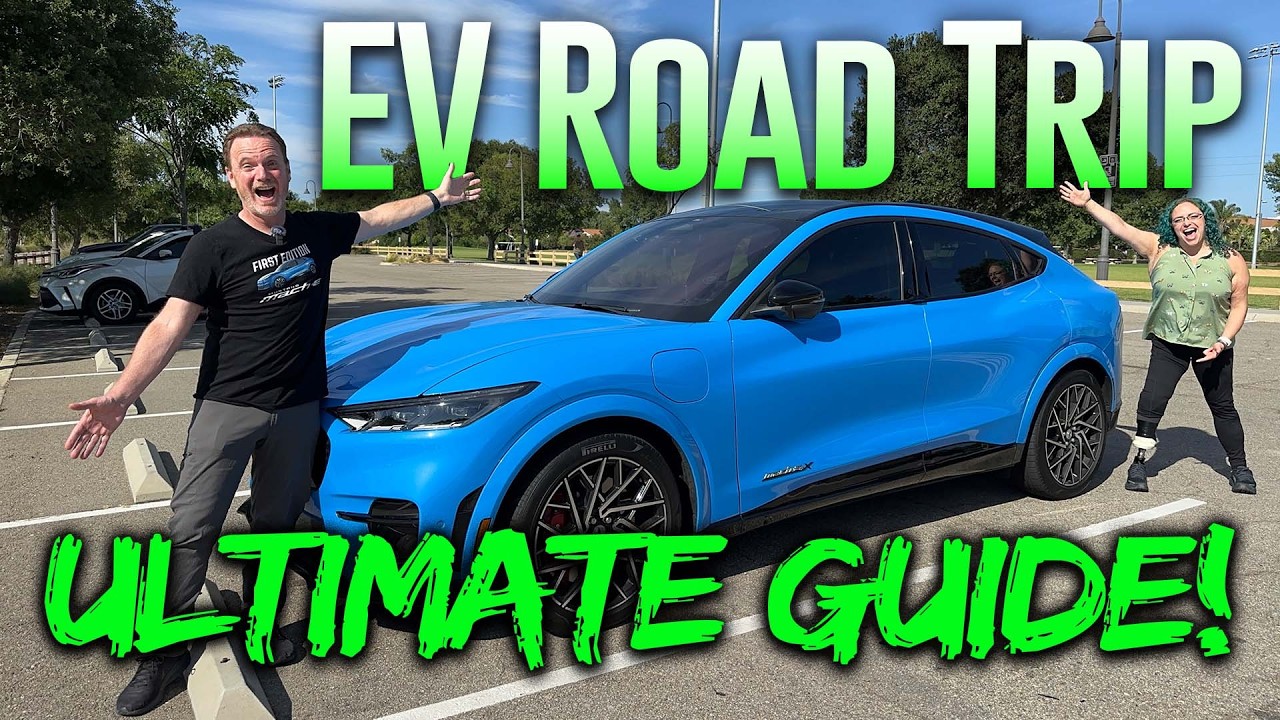
Overview: Mastering the EV Road Trip
Taking off on a long-distance road trip in an electric vehicle can feel intimidating if you are used to relying on gas stations every 50 miles. Gas cars let you drive until the low-fuel light pops up, but EVs require a slightly smarter approach. We recently loaded up our Ford Mustang Mach-E GT for a 300-mile highway run from Oceanside, California to Las Vegas, Nevada. Along the way, we put all our road-testing strategies to work: pre-trip route planning, packing the right emergency gear, finding optimal fast chargers, and troubleshooting tricky charging stalls on the fly.
This guide breaks down exactly how we plan, pack, charge, and execute a stress-free EV road trip so you can hit the open highway with total confidence.
Prerequisites & Equipment
Before rolling out of your driveway, make sure you have your digital accounts set up and your hardware stowed. Here is what you need on hand:
| Category | Item / Software | Purpose |
|---|---|---|
| Navigation Apps | Google Maps, Apple Maps, ABRP (A Better Routeplanner), or In-Car Nav | Calculates charging stops based on real-time vehicle State of Charge (SoC) and efficiency. |
| Community Apps | PlugShare, Chargeway | Verifies charger reliability, user check-ins, broken stalls, and nearby amenities. |
| Fast Charge Adapter | NACS to CCS Adapter (e.g., Official Ford, Lectron, or A2Z) | Gives CCS vehicles access to thousands of Tesla V3/V4 Supercharger stalls. |
| Level 2 Adapter | Tesla Destination to J1772 Adapter | Lets non-Tesla EVs plug into Tesla Level 2 chargers at hotels or Airbnbs. |
| Emergency Power | Portable Mobile Charger (120V / 240V) | Provides emergency backup charging from standard wall outlets or RV parks. |
| Tire Care | Cordless Battery-Powered Tire Inflator & Jump Pack | Allows quick pressure adjustments without needing 12V car cables or gas station air pumps. |
Pro-Tip: Don't Charge to 100% at Fast Chargers!
It is tempting to stay plugged in until your battery hits 100%, but fast charging slows down dramatically past 80% to protect the battery pack. Route planners usually tell you to unplug around 60% to 80% because it is significantly faster to drive to the next charger at a lower state of charge than to sit waiting for those last few percentage points. Top off to 100% at home overnight before you leave, but stick to the 80% rule on the highway!
Step 1: Build Your EV Route Plan
Unlike gas cars, EV routing depends on your specific model’s efficiency, battery size, and current state of charge. You can plan your route using several tools:
- In-Car Navigation: Ford Nav, GM Google Built-In, and Tesla Nav communicate directly with your car's battery management system. They automatically adjust predicted arrival percentages based on speed, elevation, and cabin climate control.
- Apple Maps or Google Maps: When connected via Apple CarPlay or Android Auto, these apps pull real-time battery data from compatible EVs to add required fast-charging stops automatically.
- A Better Routeplanner (ABRP): The gold standard for deep customization. ABRP lets you tweak variables like headwind, payload weight, and preferred charging networks.
When reviewing your route, pay attention to predicted arrival percentages. We prefer arriving at fast chargers with 10% to 20% battery remaining. This gives you a safe buffer if you hit unexpected traffic, cold weather, or need to re-route to a backup station.
Step 2: Pack Essential EV Hardware
EV road-tripping means you won't be stopping at traditional gas stations as often, which changes what gear you need to store in your trunk or frunk:
- Charging Adapters: Keep your NACS-to-CCS fast-charging adapter and Level 2 destination adapter accessible. Opening up access to Tesla Superchargers instantly expands your charging options across major highways.
- Windshield Cleaning Kit: Since fast-charging plazas at Walmarts or banks rarely have squeegees, keep a spray bottle of glass cleaner and microfiber towels in your frunk to clear off highway bugs.
- Standalone Portable Jump Starter & Air Pump: Never jump-start a stranded gas car directly from your EV's 12V system, as it can damage delicate onboard electronics. A self-contained battery jump pack handles roadside favors safely and doubles as a cordless tire inflator when elevation changes shift your tire pressure.
- Portable Mobile Charging Cable: Stash your trickle charger under the subfloor. If you end up at a remote Airbnb or experience a local grid power outage, a standard 120V outlet can get you enough emergency miles to reach a working DC fast charger.
Step 3: Master the Fast Charging Workflow
When you pull up to a public fast charger (such as Electrify America, EVgo, or Tesla), executing a quick charging session comes down to choosing the right activation method:
- Plug & Charge: The easiest method available on supported vehicles (like Ford, Porsche, and GM). You simply plug the cable into your car, and the charger communicates with your stored account automatically to start power flow.
- Network Mobile Apps: If Plug & Charge isn't enabled, open the station operator's app (or your vehicle manufacturer's ecosystem app, like FordPass or MyChevy), select the station ID number, and tap "Start Charging."
- Credit Card Swipe / Tap: Most modern hardware includes tap-to-pay card readers, though app activations tend to be more reliable.
If you plan to use networks like Electrify America or EVgo frequently on a long trip, consider signing up for their monthly pass subscriptions ($7 to $13/month). They usually lower your per-kWh charging rates by 20% to 25%, easily paying for themselves in just one or two charging stops.
Step 4: Pick Chargers Based on Amenities and Backup Options
When picking between multiple charging stops along your route, look beyond just distance:
- Stall Count Matters: A location with 12 to 20 stalls (like large Tesla or Electrify America hubs) gives you a much higher chance of pulling right up to an open plug compared to a small 4-stall site.
- Match Your Vehicle's Max Charge Speed: If your EV caps out at 150 kW DC fast charging, plugging into a 350 kW dispenser won't make your car charge any faster. Leave 350 kW plugs open for 800V vehicles (like Hyundai Ioniq 5 or Porsche Taycan) if 150 kW stalls are available.
- Combine Stops with Meals: We always align our 30-minute charging sessions with lunch or bathroom breaks. Sitting in the car charging for 15 minutes feels slow, but plugging in while you walk into a store to grab food makes the stop feel instantaneous.
- Check PlugShare Before Rolling In: Always check recent user reviews on PlugShare. If a site shows recent check-ins reporting dropped power, cut cables, or transformer issues, pick a different station down the road.
Step 5: How to Handle Charging Troubles
Even with great planning, you might encounter a stall that refuses to initiate a charge or delivers painfully slow speeds (like 30 kW on a 150 kW plug). Here is our step-by-step troubleshooting routine:
- Re-seat the Plug: Unplug the cable, wait 10 seconds, press the connector firmly into your car's charge port, and hold it upward slightly until the latch locks. Heavy liquid-cooled cables can pull downward and disrupt data pin connections during initiation.
- Switch Activation Methods: If Plug & Charge times out, try initiating the stall directly through the station's native smartphone app or through your vehicle manufacturer's app.
- Swap Stalls: Don't waste 20 minutes fighting a single temperamental handle. Unplug, pull into the stall next to you, and try again. Individual cabinet modules or connectors often go offline while the rest of the site functions normally.
- Top Off Before Busy Destinations: If you are heading into a dense tourist hub (like the Las Vegas Strip) where hotel chargers are often full or broken, stop at a fast charger on the outskirts of town. Arriving at your final destination with 70% battery eliminates the stress of hunting for working chargers during your stay.
Road tripping in an EV is smooth, quiet, and reliable once you get these basics down. Plan your stops ahead of time, pack your adapters, and enjoy the ride!